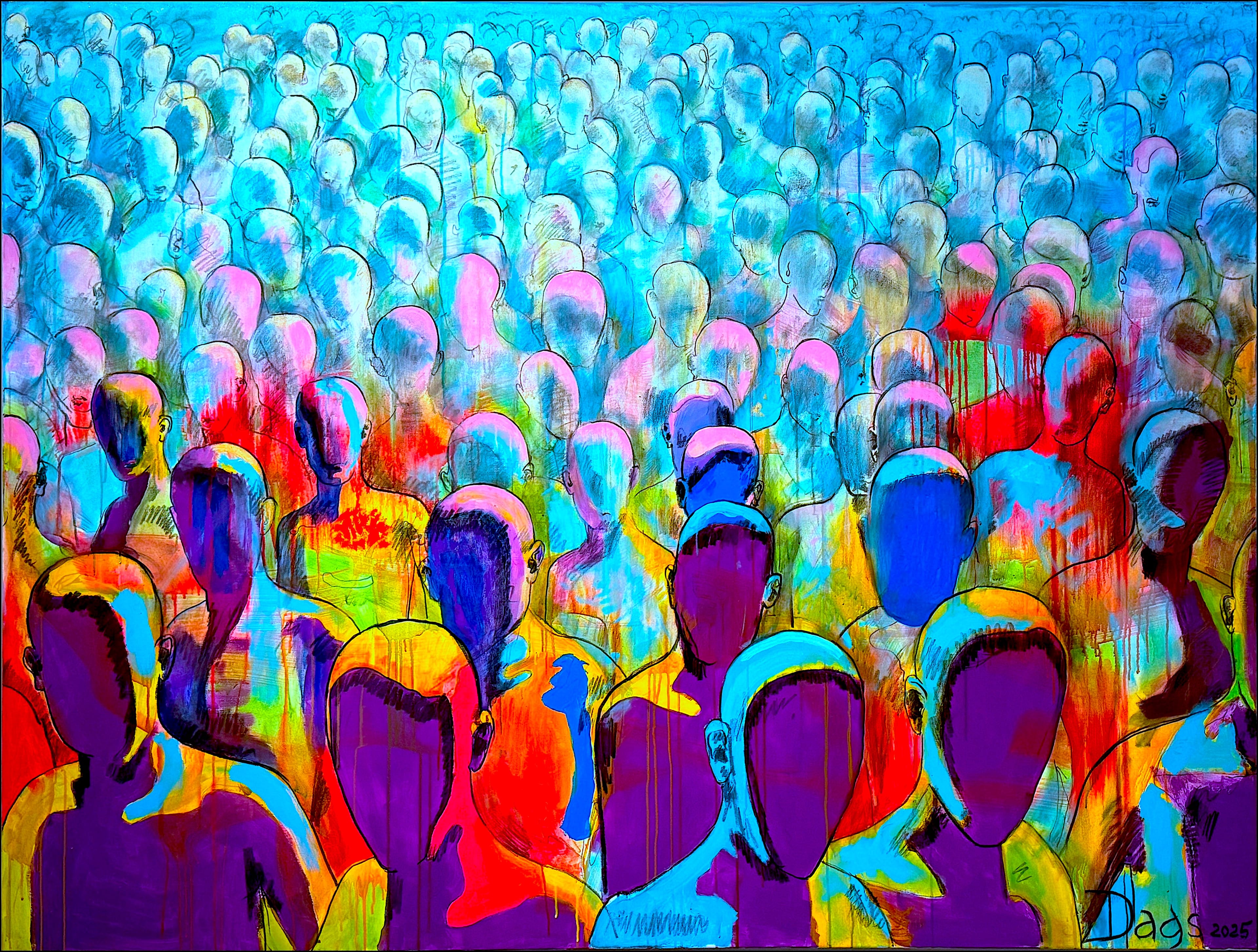
by Dags & Dante
Divine Comedy
Thirty years of repainting Dante's Divine Comedy as a chronicle of contemporary civilisation. An existential account in large-format painting.
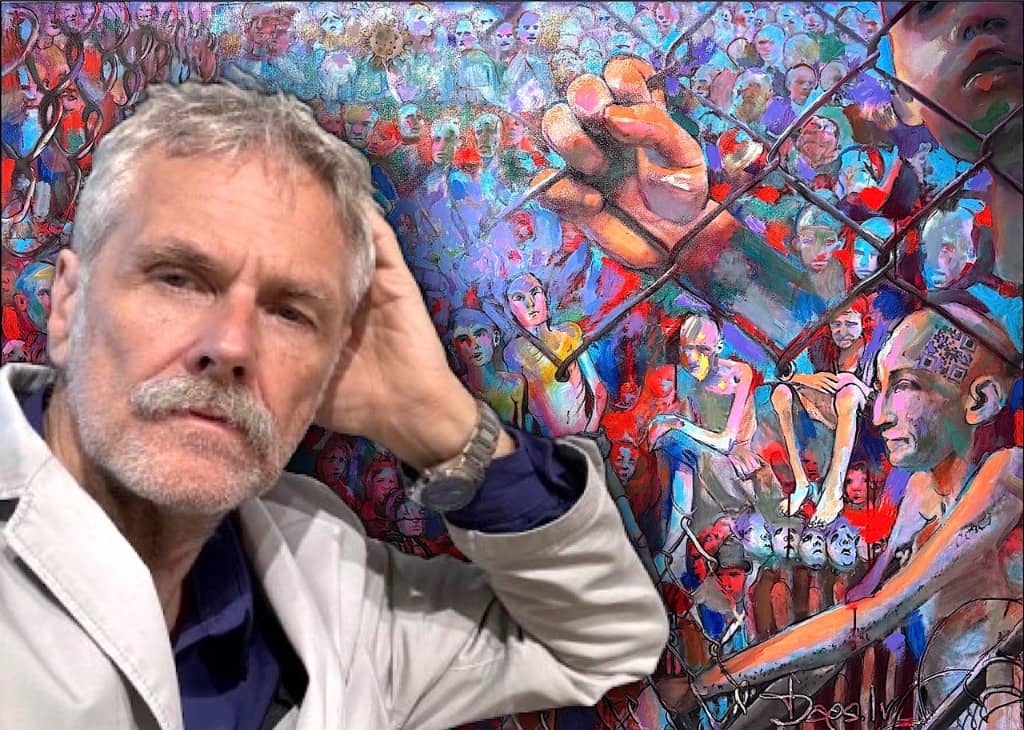
“Divine Comedy is not a story about the Middle Ages. It is a visual language for understanding the civilisation in which we live.”
— Dags Vidulejs, "A Visual Sociology of the Twenty-First Century"
Why Divine Comedy?
“We cannot fully understand our own century while living inside it. Art allows us to step outside history and observe the invisible structures that shape human civilisation.”
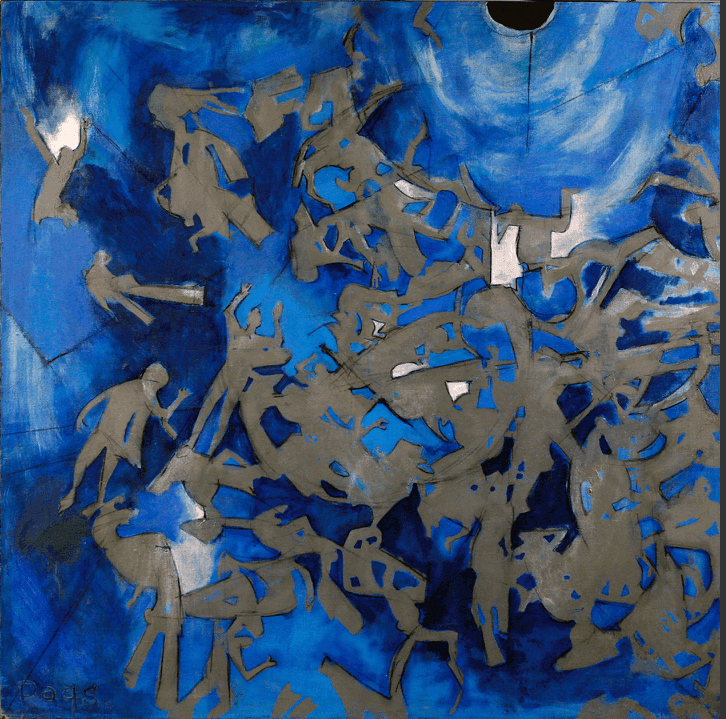
Dante's Divine Comedy is presented here not as a medieval religious narrative, but as a conceptual framework for understanding the structures of contemporary civilisation. Drawing upon decades of work in painting, sociology and political thought, Dags Vidulejs develops a distinctive visual language in which anthropomorphic forms dissolve into abstract rhythmic structures.
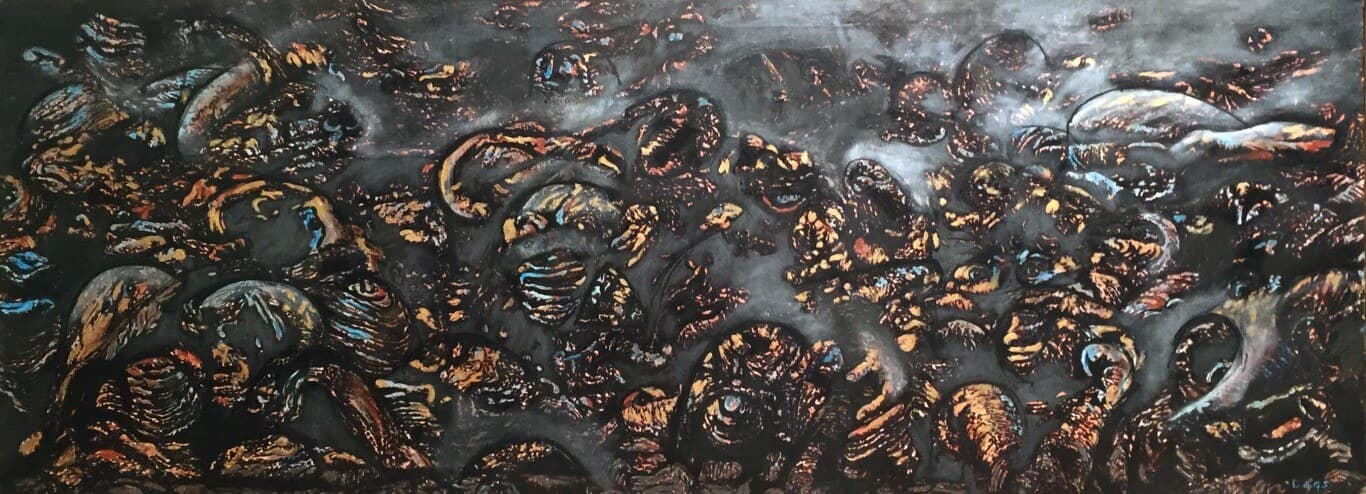
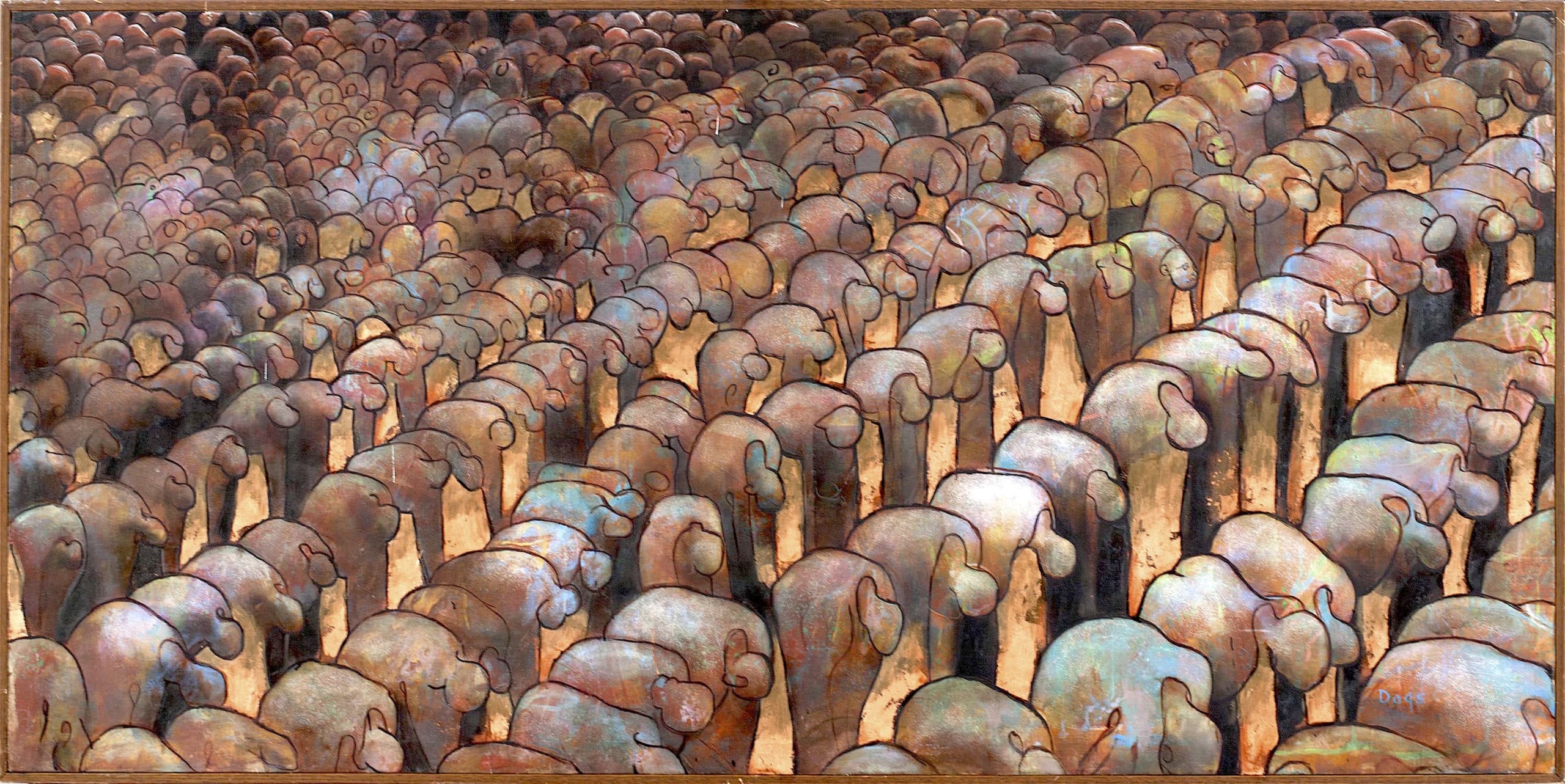
The three symbolic realms — Inferno, Purgatory and Paradise — are interpreted as metaphors for different modes of social organisation. Inferno reflects structures dominated by coercion, fear and the pursuit of power; Purgatory represents the civic sphere of responsibility and dialogue; while Paradise symbolises communities built upon compassion and the common good.
Three cantiche, after Dante
Inferno
The descent: society, power and conflict at their rawest.
Enter Inferno · 33 works →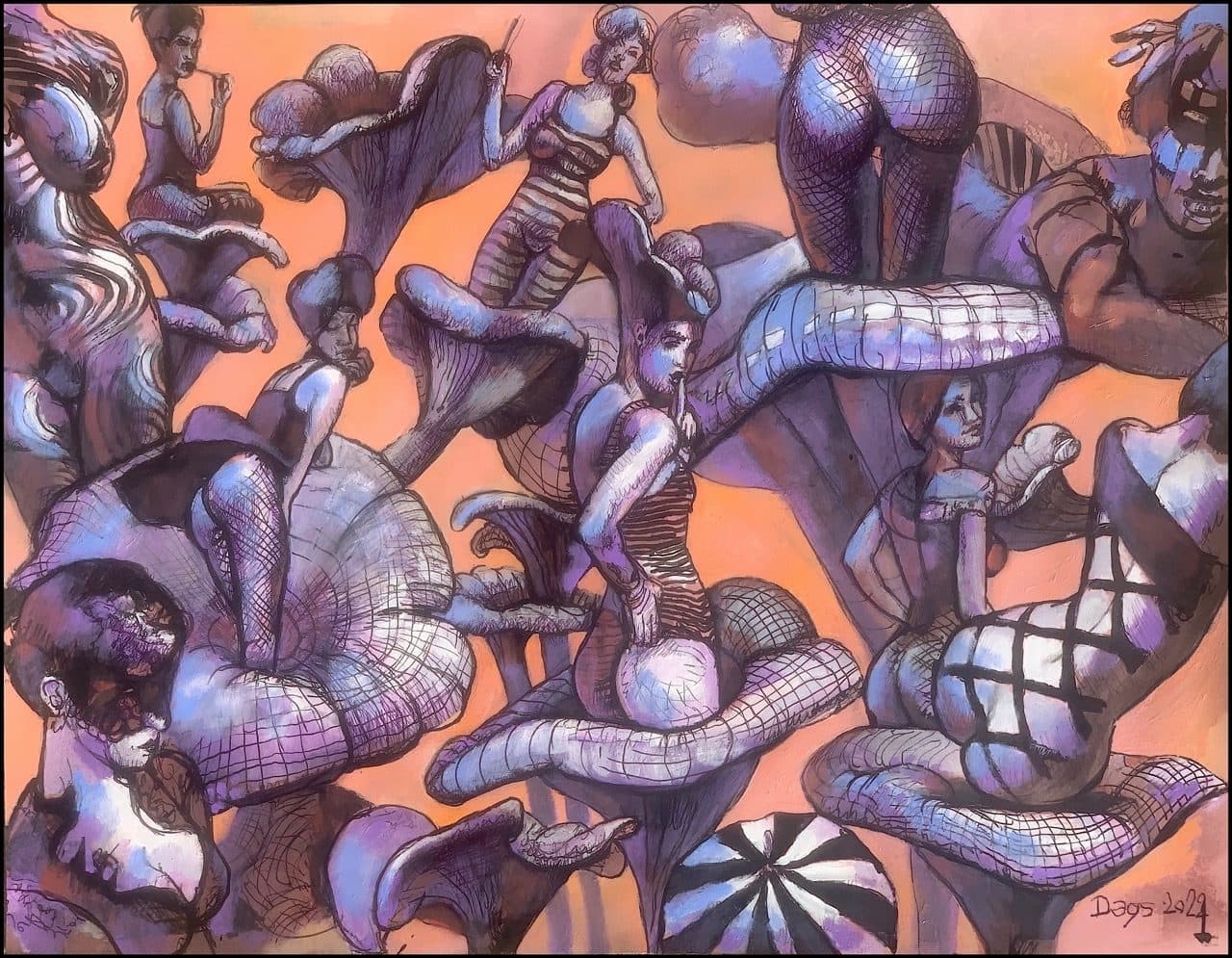
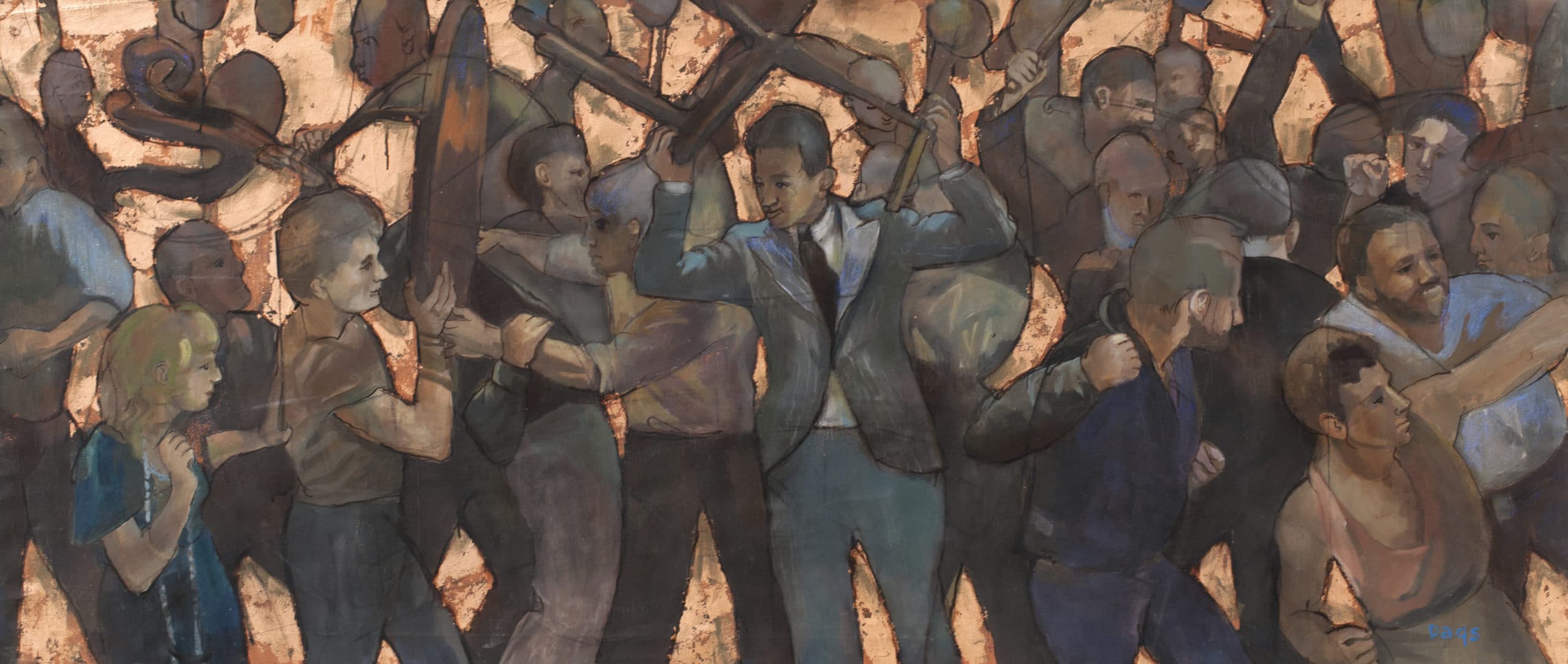
Purgatory
The in-between: transformation, doubt and the weight of choice.
Enter Purgatory · 33 works →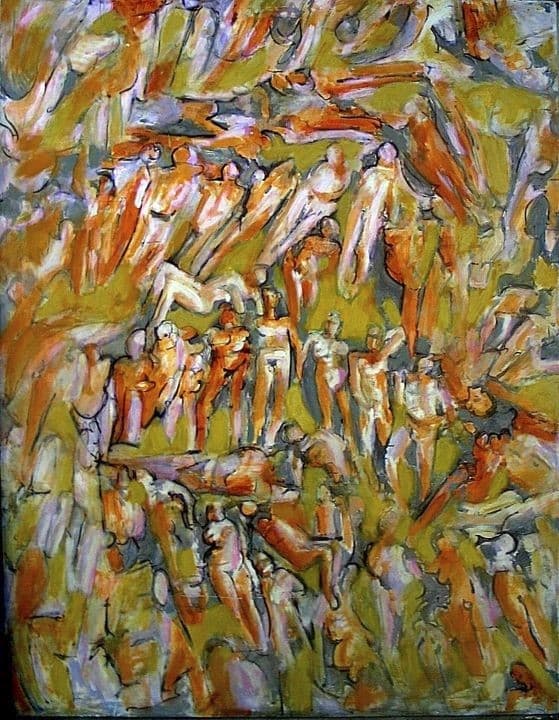
Paradise
The ascent: hope, love and the light that thaws what was frozen.
Enter Paradise · 33 works →The Process
The Artist's Studio
Sketches, studies, works on paper and the charcoal drawings made while the Divine Comedy cycle took shape.
Enter the Studio →If this project spoke to you
Jūrmala City Art Museum · Rietumu Bank Exhibition Hall · Māksla XO · Zunda Towers · Art Hong Kong · ART Vilnius · ART Moscow · Tel Aviv Performing Art Center · ART Helsinki · Kutaisi · Frankfurt · Bruges · MC2 Galleria