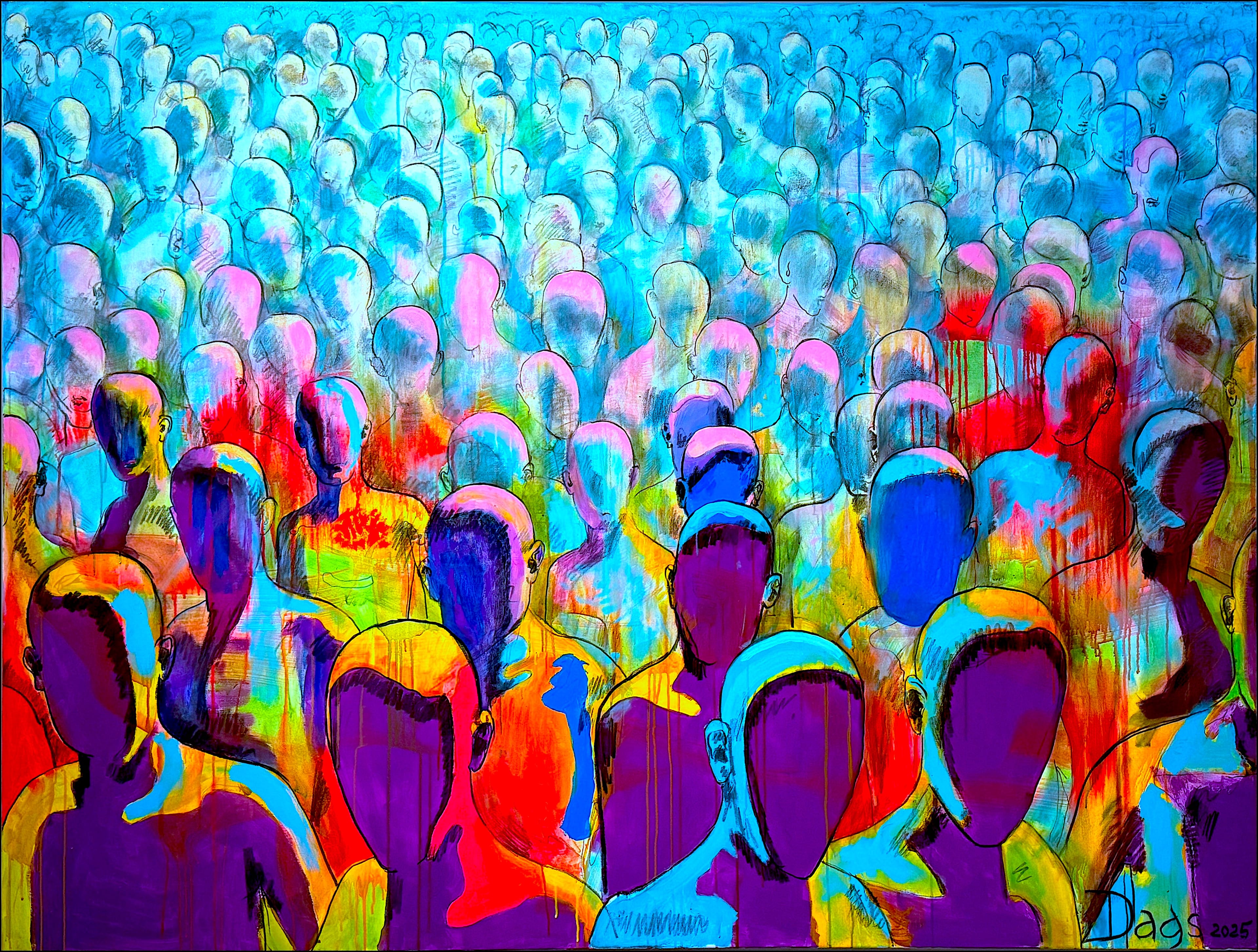
von Dags & Dante
Göttliche Komödie
Dreißig Jahre, in denen Dantes Göttliche Komödie neu gemalt wird: eine Chronik der heutigen Zivilisation. Ein existenzieller Bericht in großformatiger Malerei.
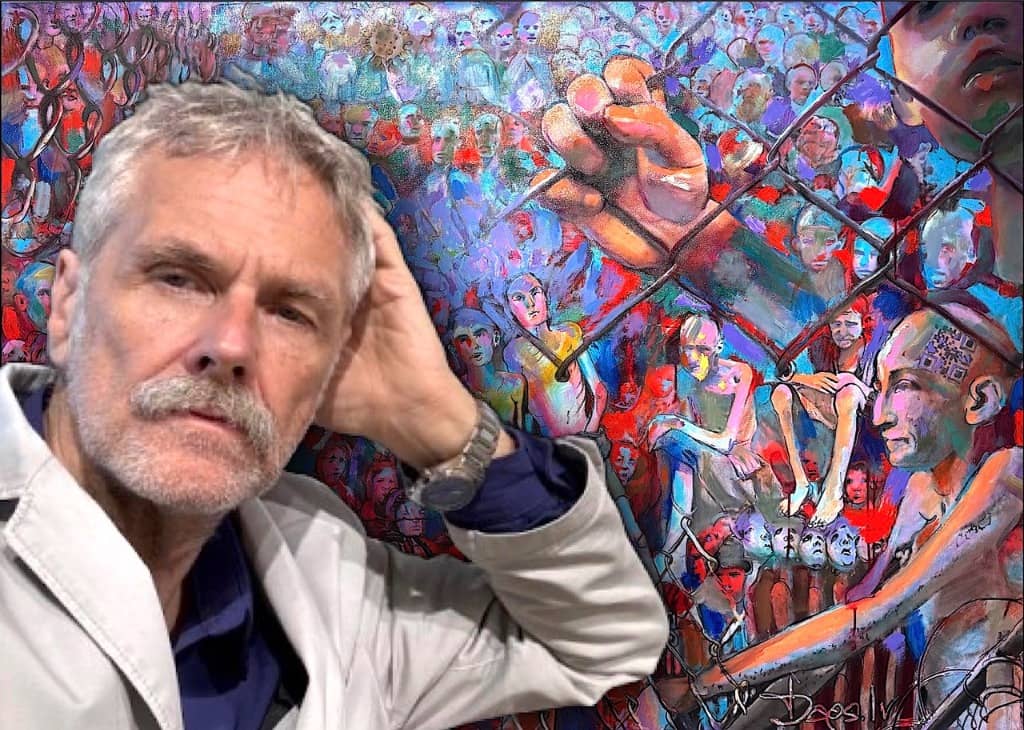
“Divine Comedy is not a story about the Middle Ages. It is a visual language for understanding the civilisation in which we live.”
— Dags Vidulejs, "A Visual Sociology of the Twenty-First Century"
Warum die Göttliche Komödie?
“We cannot fully understand our own century while living inside it. Art allows us to step outside history and observe the invisible structures that shape human civilisation.”
Dante's Divine Comedy is presented here not as a medieval religious narrative, but as a conceptual framework for understanding the structures of contemporary civilisation. Drawing upon decades of work in painting, sociology and political thought, Dags Vidulejs develops a distinctive visual language in which anthropomorphic forms dissolve into abstract rhythmic structures.
The three symbolic realms — Inferno, Purgatory and Paradise — are interpreted as metaphors for different modes of social organisation. Inferno reflects structures dominated by coercion, fear and the pursuit of power; Purgatory represents the civic sphere of responsibility and dialogue; while Paradise symbolises communities built upon compassion and the common good.
Drei Cantiche, nach Dante
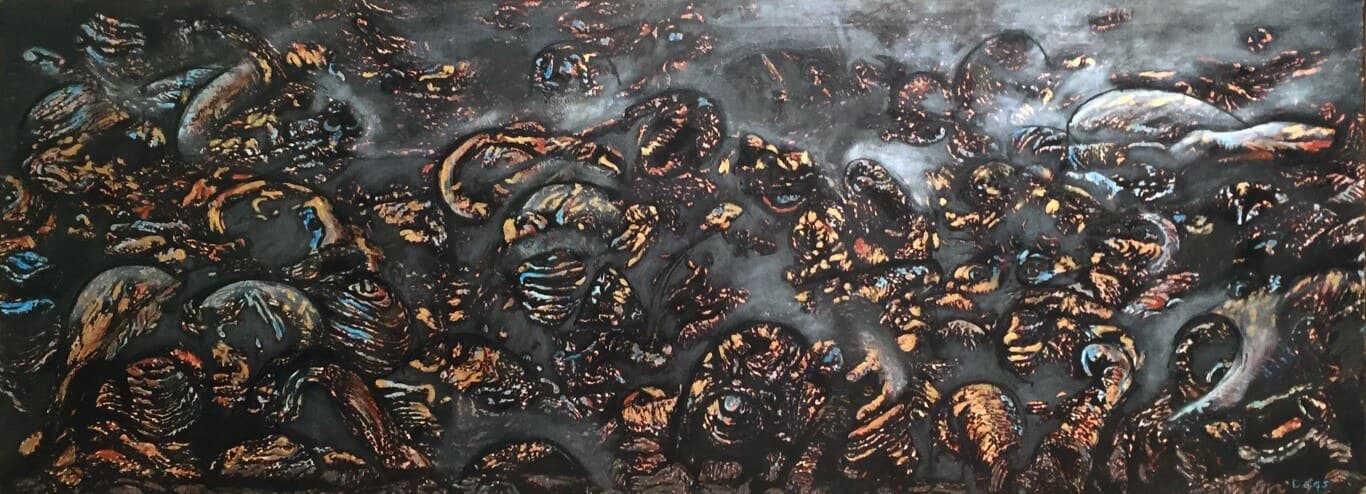
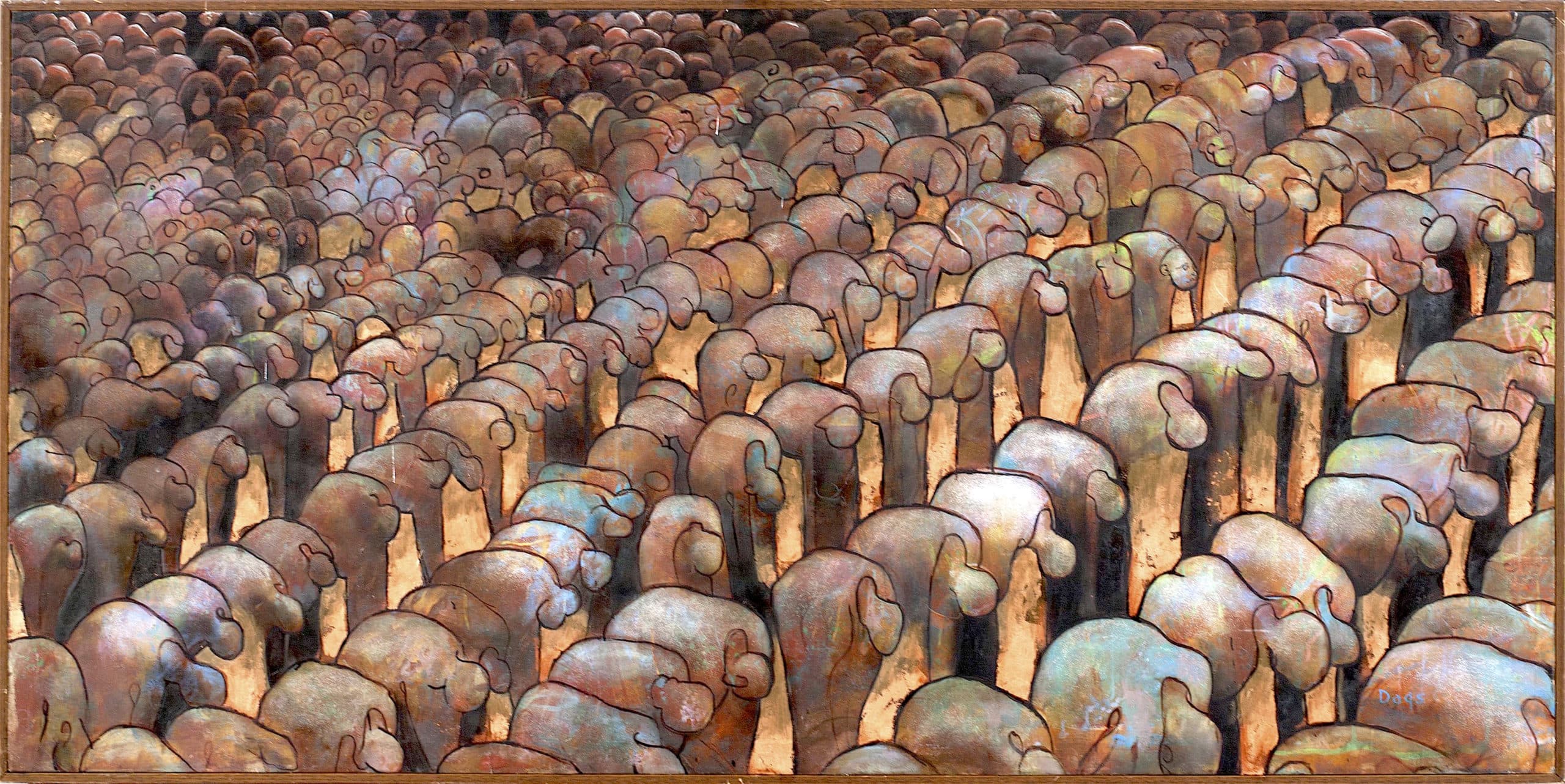
Inferno
Der Abstieg: Gesellschaft, Macht und Konflikt in ihrer rohesten Form.
Inferno betreten · 17 works →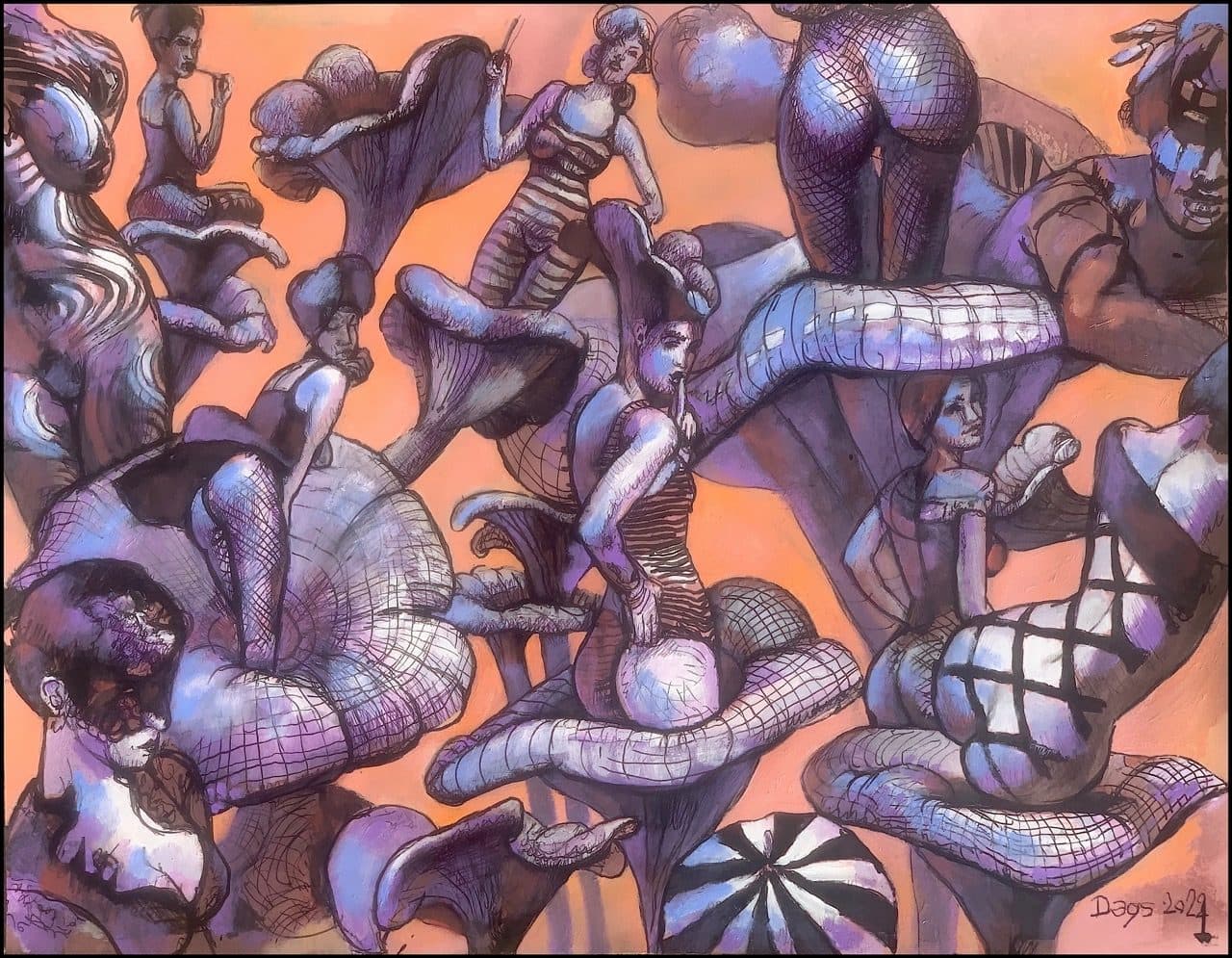
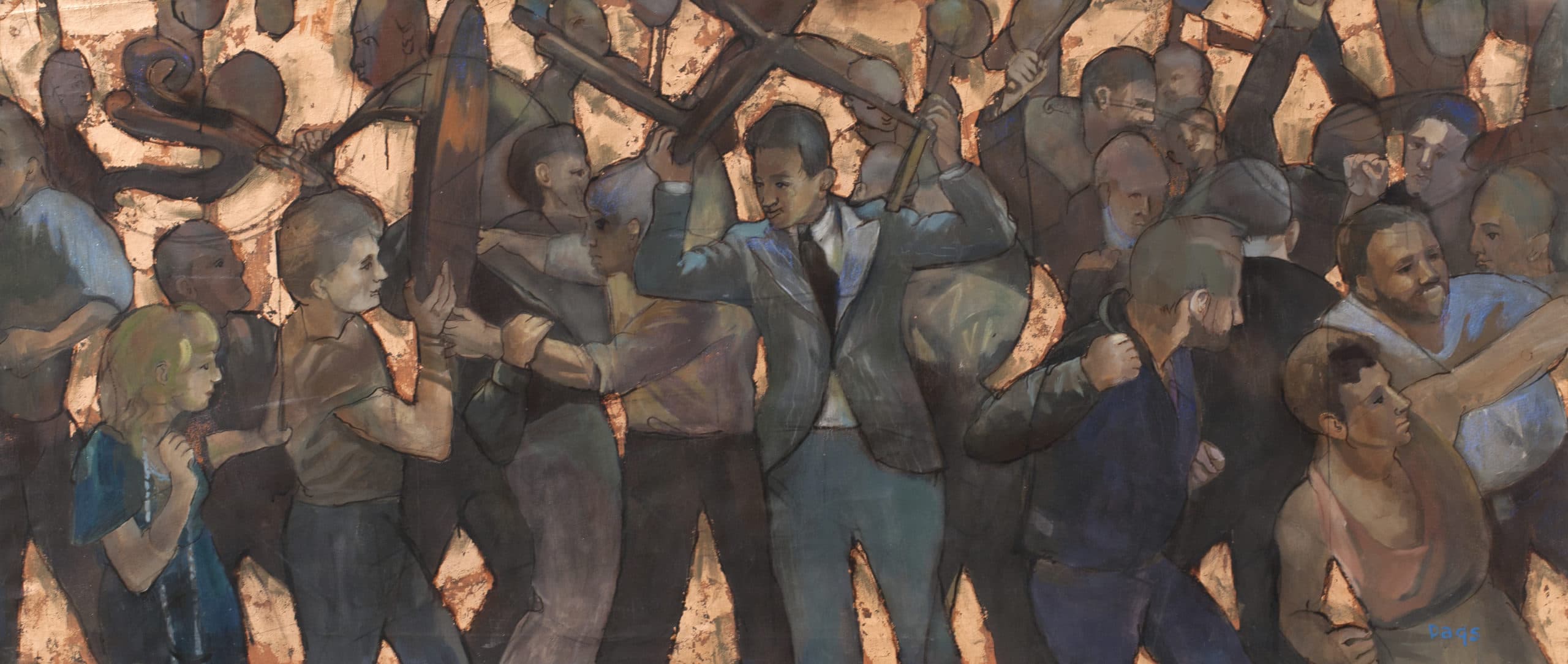
Purgatorio
Das Dazwischen: Wandel, Zweifel und die Last der Entscheidung.
Purgatorio betreten · 18 works →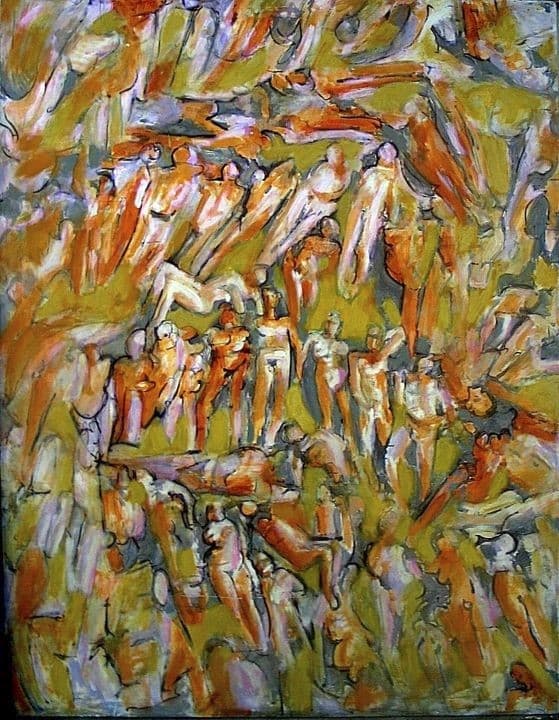
Paradiso
Der Aufstieg: Hoffnung, Liebe und das Licht, das auftaut, was gefroren war.
Paradiso betreten · 22 works →Der Prozess
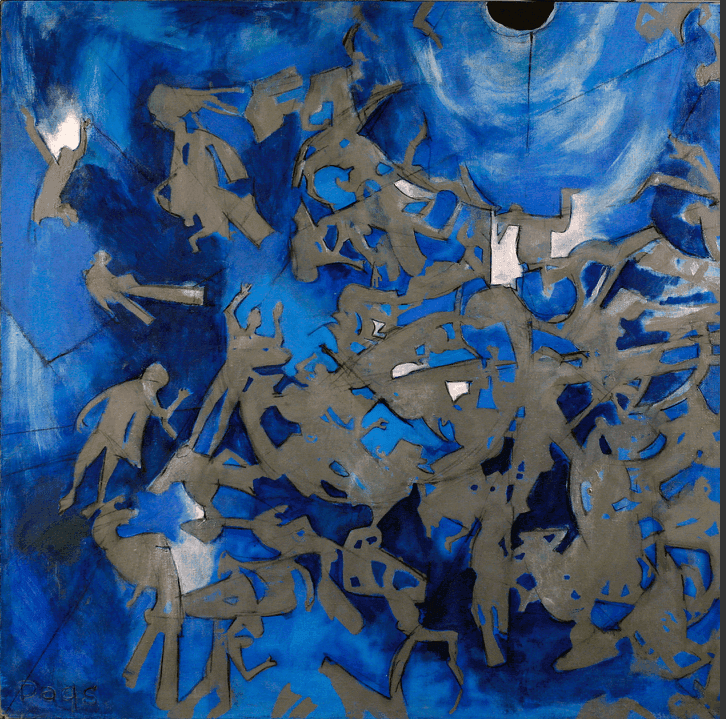
Das Atelier des Künstlers
Skizzen, Studien, Arbeiten auf Papier und die Kohlezeichnungen, die während der Arbeit am Zyklus Göttliche Komödie entstanden sind.
Studio betreten →Wenn dieses Projekt Sie angesprochen hat